From voice to book: how can one memory last a lifetime?
You simply start by talking. Memona handles the rest: text, book, QR code. Here is the whole process.
From voice to book: how can one memory last a lifetime?
Some memories feel difficult to write down.
Because a memory is not just a fact. It has a tone, a pause, a laugh, and a feeling moving through the person who is telling it. You can say, "My child walked for the first time," but when you describe what that moment felt like, a completely different picture appears.
Memona begins with this simple truth: the most natural way to preserve family memories is to talk.
Step one: choose the memory
It does not need to begin as a big project. The best beginning is one memory.
You may have a favorite photo on your phone. A child's first step, first tooth, first day at kindergarten, laughter with a grandfather, an ordinary morning at home, or a sleepy face just after waking up.
What matters is not whether the photo is perfect. What matters is that it reminds you of something.
Ask yourself:
- Why did I keep this moment?
- What happened here that is not visible in the photo?
- What was my child like at that time?
- What did I feel that day?
These questions open the door to the memory.
Step two: talk
Then, instead of trying to write, you can speak.
People are often more relaxed when they talk. A sentence may remain unfinished, the words may be simple, and laughter may appear in the middle. All of this makes the memory more alive.
For a parent, it can feel like a daily note:
When I took this photo, you still could not say the words fully, but you were trying to explain everything.
Or:
We were so tired that day, but you laughed in a way that changed the whole mood of the house.
Years later, sentences like these do more than give information. They bring back the feeling of that time.
Step three: turn voice into text
A voice memory is deeply valuable, but turning it into readable text also matters. In the future, family members may sometimes want to listen and sometimes want to read.
Memona transcribes voice and video recordings into text. Then that text can be polished into a story. The goal is not to lose the speaker's voice, but to bring it into a form that is easier to read.
This means the memory remains in two forms:
- the original voice or video;
- a readable story text.
These two forms complement each other. Text clarifies the memory, while voice gives it life.
Step four: bring the family into the process
A child's memories are not seen only through a parent's eyes. Grandmothers, grandfathers, aunts, uncles, older sisters, and older brothers also leave their own marks on the child's life.
In Memona, you can invite family members. They can add their own memories too. This gives the child a many-voiced family memory.
When different people talk about the same moment, something beautiful can happen. A mother remembers the emotion of the event, a grandfather mentions a funny detail, and an aunt adds another photo from that day.
The result is that a memory stops being a single note and becomes a family conversation.
Step five: turn it into a book
Digital memories are convenient, but a physical book has its own place.
A book is visible at home. It can be held. It can be turned page by page together. As the child grows, it is easy to return to it. For the family, it becomes not something to "look at one day," but a keepsake that is truly opened and read.
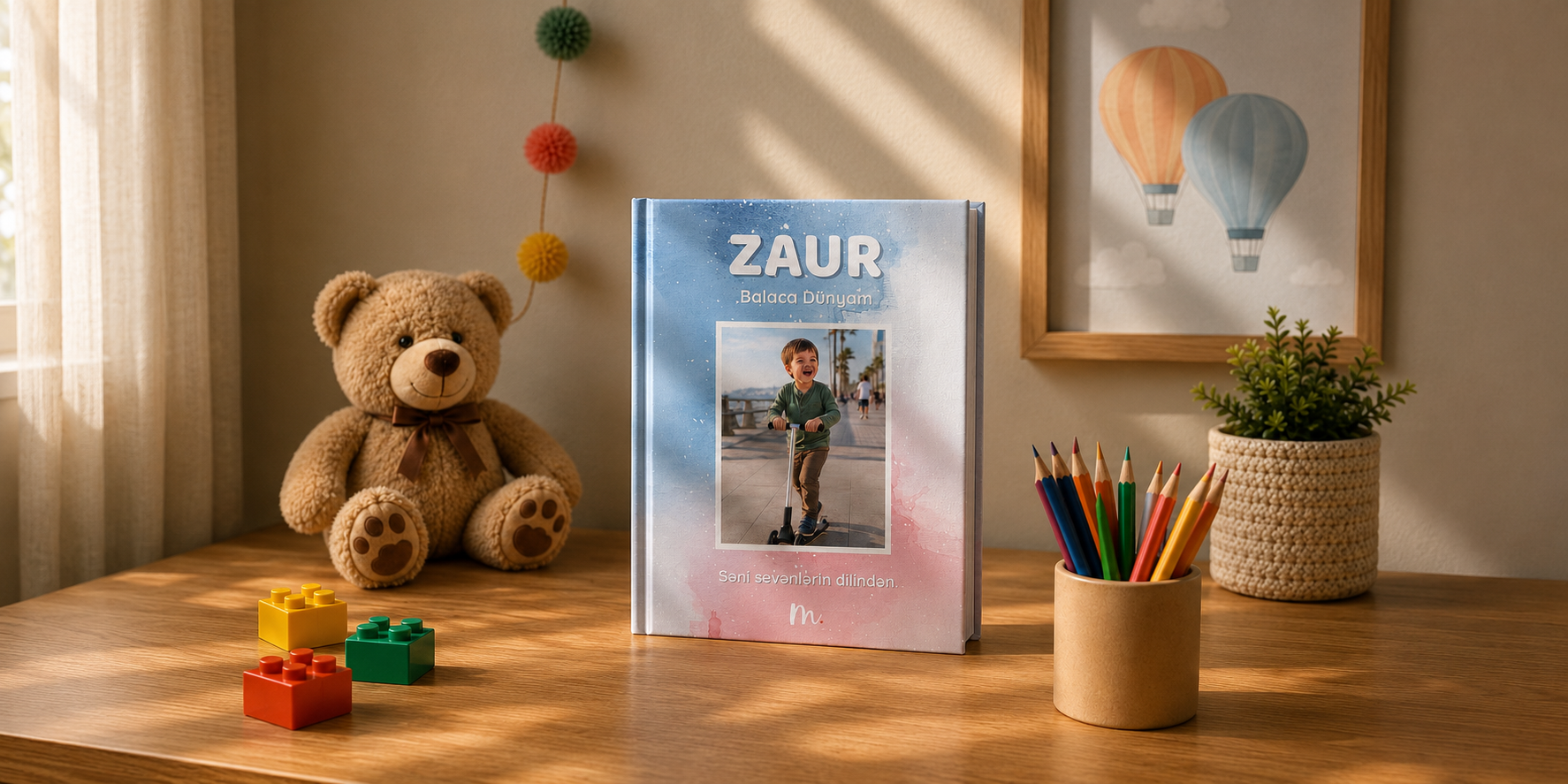
Memona aims to gather memories into a book with QR codes. Each page includes a photo and a story. The QR code leads to the voice or video behind that memory.
This format makes something simple possible: years later, the child does not only read their childhood. They hear it.
Why does the QR code matter?
A QR code may look like a technical detail, but for family memory it is meaningful.
The printed book gives order and permanence. The voice gives life. The QR code connects the two.
A page opens in the book. There is a small child in the photo. Beside it is the story of that day. When the QR code is scanned, the mother's or father's voice is heard.
In the future, this can become a powerful experience. The child does not only think, "This is what I looked like." They feel, "This is how they spoke about me. This is how they remembered me."
Not a perfect archive, but a living legacy
Keeping memories can sometimes feel intimidating. It can seem as if everything must be correct, chronological, and perfect.
In reality, family memory does not need perfection. It needs consistency and sincerity.
One photo in a week.
One voice note in a month.
A memory told by a grandmother during a holiday.
A few sentences from a father on a birthday.
As these gather, they create a living map of the child's life.
The best time to begin is now
Children grow quickly. A moment that looks ordinary today can become an irreplaceable memory a few years later.
That is why you do not need to wait for a special day. One photo taken today, one sentence said today, one voice note recorded today is enough.
Memona helps turn that small beginning into a family legacy that is preserved, read, heard, and one day gathered into a book.
Sometimes a memory kept for a lifetime begins simply like this:
"I want to tell you about this day..."